Health and Safety Policy — Commercial Waste Chesham
Our company is committed to maintaining the highest standards of health and safety across all commercial waste services. This policy sets out how Commercial Waste Chesham and its contractors will identify, control and monitor risks associated with commercial rubbish collection and waste management activities. The purpose is to protect employees, contractors, clients and the public while ensuring compliance with applicable statutory duties. This document forms the framework for safe working practices for every part of our rubbish company operations and establishes clear lines of responsibility.Scope and Objectives
This policy applies to all operational activities including collection, transfer, sorting, storage and disposal of business waste. It covers staff, drivers, subcontractors and visitors engaged in commercial rubbish collection in Chesham and surrounding service areas. The objectives are to: reduce workplace incidents, prevent injury and ill health, minimise environmental harm, ensure safe vehicle operation, and maintain competence through training and supervision. All employees must familiarise themselves with the controls relevant to their role. Risk assessment and assignment of duties underpin safe performance. Management will ensure that documented risk assessments are completed for routine and non-routine tasks and that appropriate control measures are implemented. Key duties include:
- Senior management — policy leadership, resource allocation and performance review;
- Supervisors — local risk control, toolbox talks and daily checks;
- Employees and drivers — follow procedures, use PPE and report hazards promptly.
Training, Competence and Communication
Training is essential to safe commercial rubbish collection. The company will provide induction, task-specific training, refresher courses and practical assessments for vehicle crews and site teams. Training records will be retained and monitored. Communication of hazards, changes to processes and lessons learned from incidents will be achieved via briefings, notices and clear operational instructions. Personnel will not be assigned tasks for which they are not competent. Vehicles, plant and site operations represent significant risk areas. Vehicle checks, loading limits and securement procedures must be strictly followed. Drivers will complete pre-use inspections and follow route-specific safety instructions. On sites and at client premises, segregation of waste streams, safe stacking, and access controls must be maintained to avoid manual handling injuries and contamination. Use of mechanical aids is encouraged where practicable and manual handling procedures are enforced.
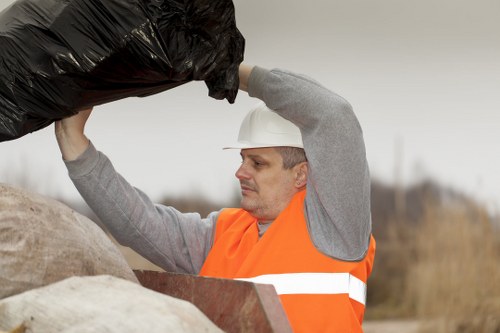
Personal Protective Equipment (PPE) and hygiene controls are mandatory where risk assessments indicate need. Standard issue PPE includes high-visibility clothing, gloves, safety boots and eye protection for relevant tasks. The company will ensure clean-changing facilities, handwashing, and protocols to prevent cross-contamination, particularly where organic or hazardous materials are handled.
Handling of hazardous, clinical or restricted wastes follows strict segregation and documentation procedures. Waste classification, containment and labelling will conform to safe handling expectations and client requirements. Subcontractors engaged in specialised waste streams will be required to demonstrate competence and hold relevant permits. Incident reporting and near-miss recording is compulsory: all incidents are to be logged, investigated and corrective actions implemented without delay to prevent recurrence.
 Emergency preparedness and response plans will be maintained for spills, fires, vehicle incidents and medical emergencies. Evacuation procedures, spill kits and containment materials will be accessible at operational bases and vehicles. First aid arrangements and qualified responders are designated across shifts. In an emergency, priority is the safety of people, followed by containment to limit environmental impact.
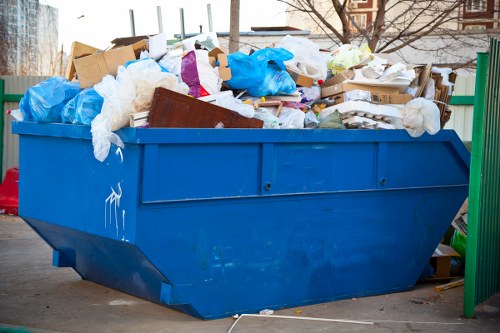 Monitoring, auditing and continuous improvement are integral to our waste management performance. Management will undertake regular audits of the rubbish company operations, driver records, training completion and incident trends. Performance indicators will include incident frequency, near-miss reports, audit findings and corrective action closure rates. Results will inform updates to procedures and resource allocation, fostering a culture of safety and accountability.
Contractor and supplier control ensures that third parties engaged in commercial waste services meet our safety expectations. Contractors will be selected based on safety performance, evidence of training, and appropriate insurances. Contract terms will stipulate responsibilities, reporting requirements and the right to suspend work where unsafe conditions persist.
Management review will be conducted periodically to ensure the policy remains relevant and effective. Reviews consider changes in operations, new risks, legislative updates and audit outcomes. Where changes are required, the updated arrangements will be communicated to all affected personnel and implemented with a clear timetable.
Commitment and compliance: the company and its workforce are committed to maintaining safe systems of work for all commercial rubbish collection and waste management services. Every person has a duty to work safely, challenge unsafe acts and support continuous improvement. This policy will be available to staff and relevant stakeholders and forms part of the corporate governance arrangements that ensure workplace safety is given the highest priority.
